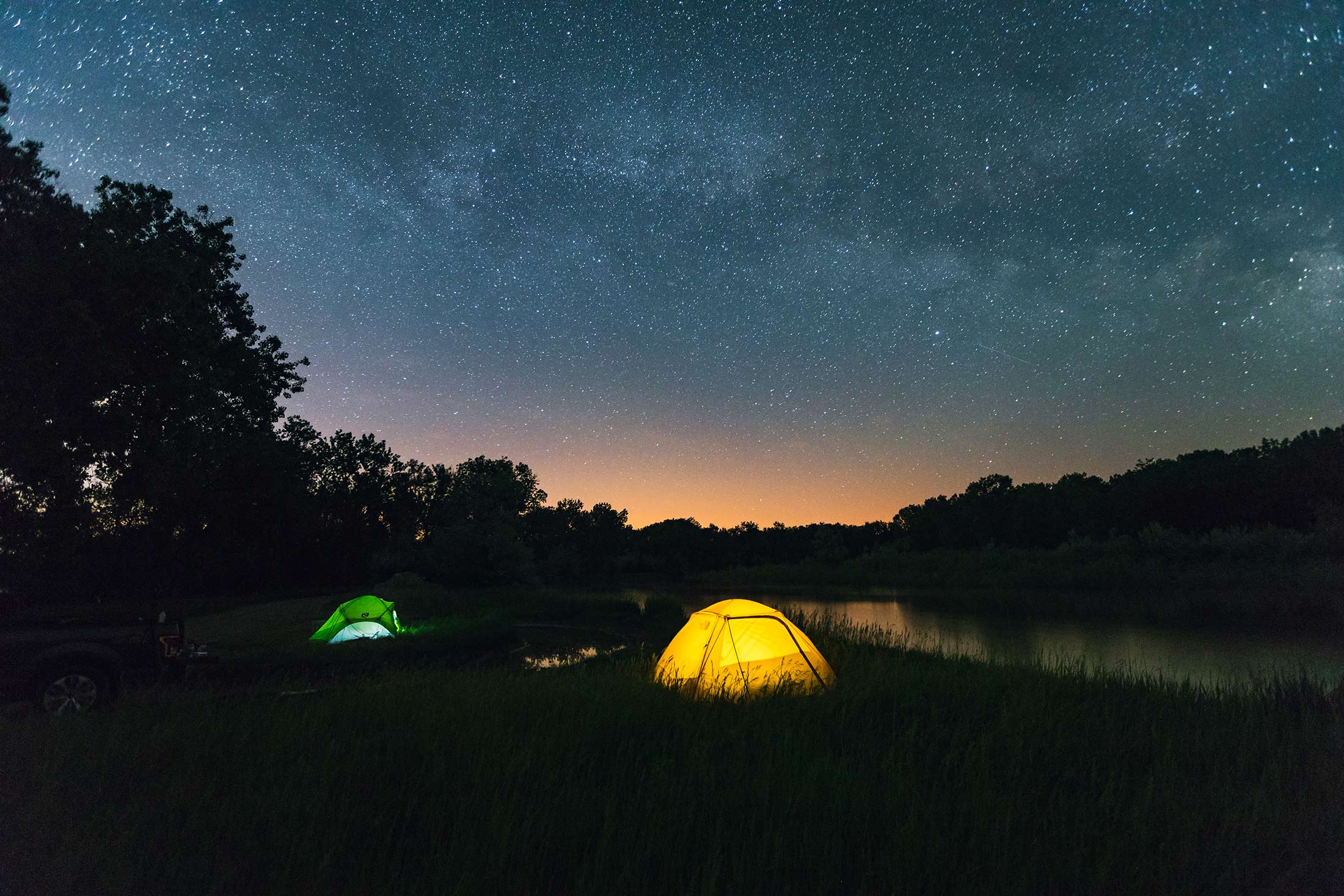
Missouri River Country offers some of the darkest skies in the Lower 48, where the Milky Way stretches across the horizon and stars seem to go on forever. With little light pollution and wide-open landscapes, this corner of Montana was made for looking up.
And you don’t have to be an astronomer to enjoy it. A little planning can help you make the most of a clear night, whether you’re stepping outside your cabin, camping under the stars or driving beyond the lights of town.
For help finding your spot, explore Trail to the Stars, a collection of stargazing locations across eastern Montana—including plenty of places right here in Missouri River Country.
Not all nights are equal when it comes to stargazing. A new moon provides the darkest conditions, while a bright moon can wash out fainter stars and details in the Milky Way.
Use a night sky calculator to help plan your outing. Enter your location and date to see when conditions are best for viewing, and check the weather forecast before you head out. Clear skies make all the difference.
You don’t need to know your constellations before you arrive. Stargazing apps such as SkyView can help you identify stars, planets and constellations as you explore the night sky.
Give your eyes time to adjust to the darkness, and keep your phone screen dim while you’re outside. Better yet, switch to a red-light setting if your device or flashlight has one.
Even in summer, temperatures can drop quickly after sunset in northeast Montana. A little preparation makes it much easier to stay awhile.
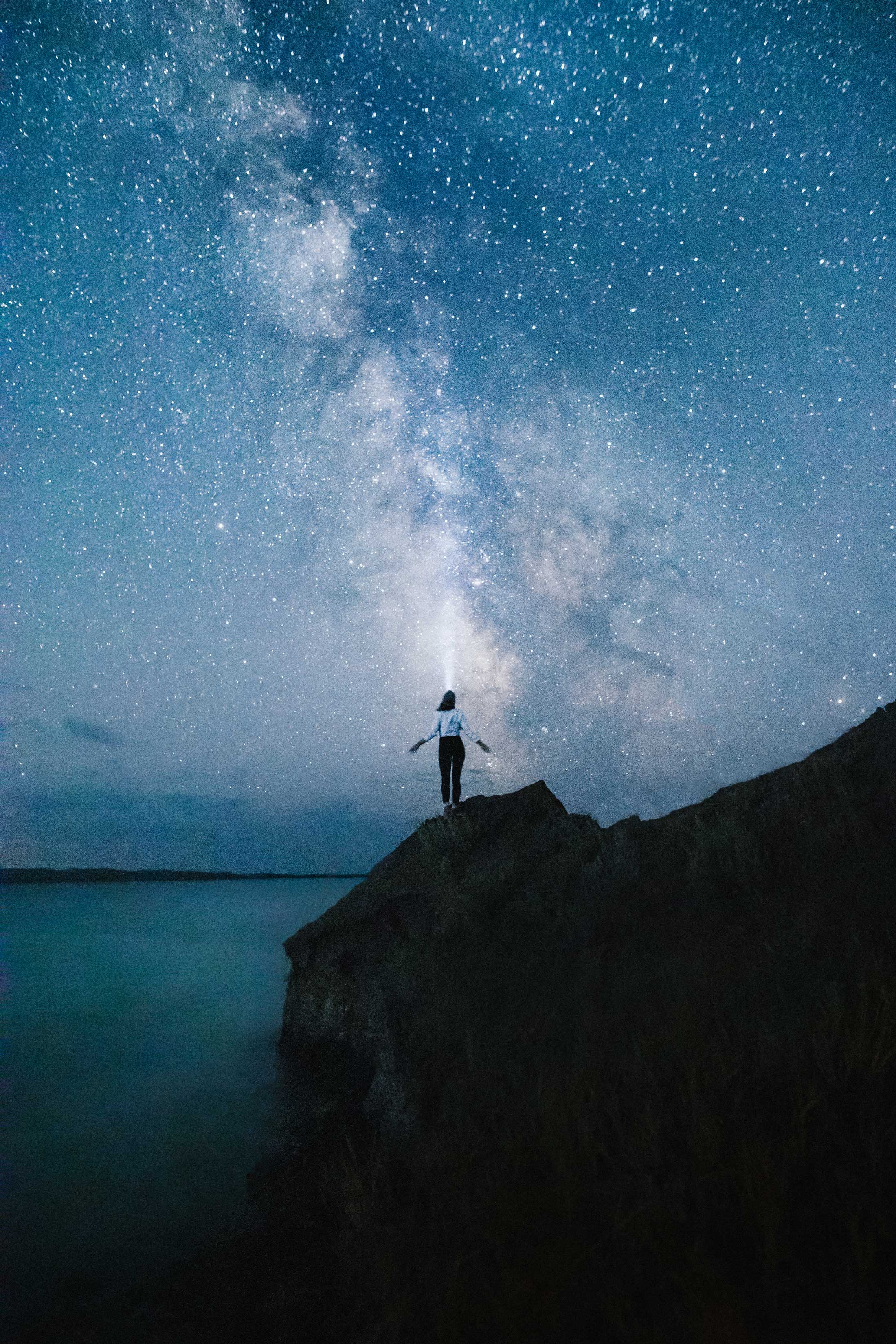 Montana Department of Commerce
Want to capture what you’re seeing? Whether you’re using a smartphone or a dedicated camera, a steady setup, the right settings and a little patience can make all the difference. Get tips for photographing the night sky with your smartphone or dig deeper with this beginner’s guide to night sky photography.
You don’t have to go far to find dark skies in Missouri River Country. Head beyond the lights of town on a clear night and you may be surprised by just how much appears overhead.
For an easy place to start, these Trail to the Stars locations offer five different ways to experience the region after dark.
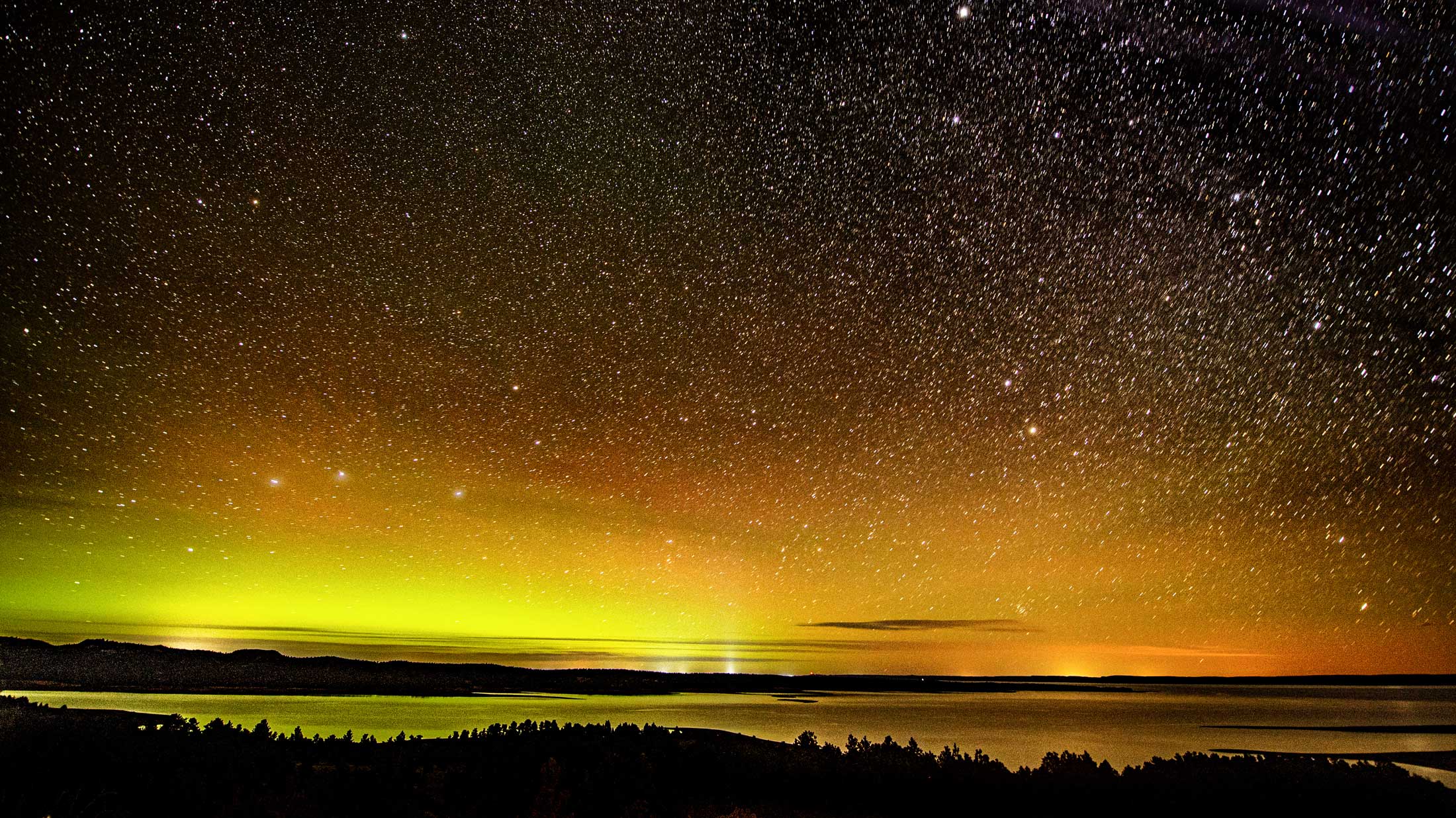 Pines Recreation Area, Amy Lynn Nelson
Along Fort Peck Lake, The Pines combines open sightlines with expansive views of the water and sky. Arrive in time to watch the sun go down, then stay as daylight fades and the stars begin to take over.
Near the Little Rocky Mountains, Antelope Creek Campground offers exceptionally dark skies with a Class 1 rating on the Bortle Scale—the darkest classification. Tent and RV sites are available, or settle in for the night in one of four appropriately named cabins: Aurora, Stargazer, Milky Way and Night Sky.
You don’t have to venture deep into the backcountry to find a dark sky. About 20 miles north of Glasgow, this fishing access site makes it easy to spend the day exploring the area and the evening watching the stars. Camp overnight or return to lodging in Glasgow when you’re ready to call it a night.
Tucked along the Hell Creek Arm of Fort Peck Lake, Hell Creek delivers the kind of darkness serious stargazers seek: a Class 1 rating on the Bortle Scale. Camping on-site means there’s no need to leave when the stars come out—just look up.
Near the Montana–North Dakota border, Brush Lake State Park pairs a day on the water with a night under a wide-open sky. Swim, paddle or relax along the shore during the day, then stay into the evening—or camp overnight—to see a different side of the park after dark.
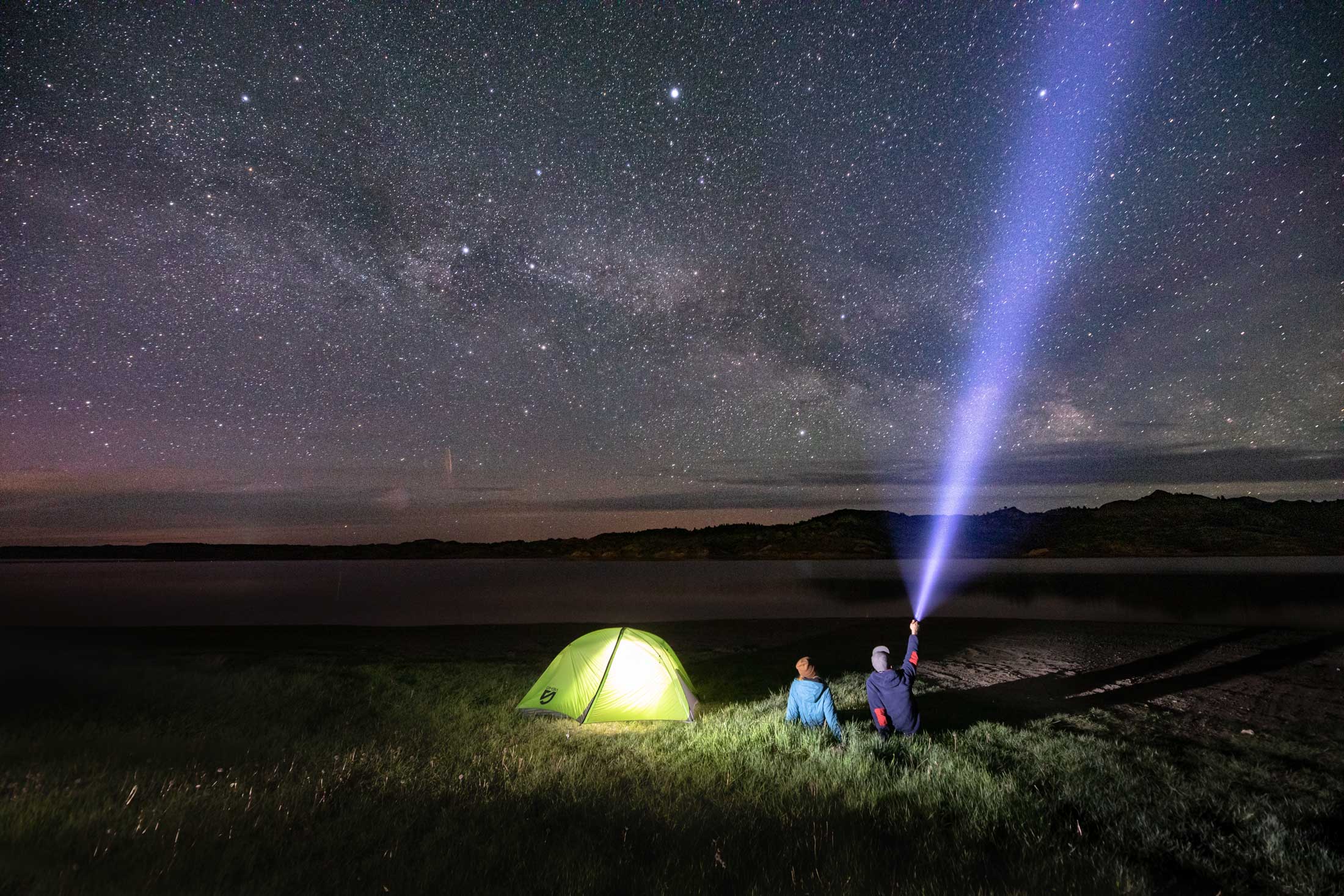 Montana Department of Commerce
There’s no single right way to experience the night sky here. Choose a comfortable bed, sleep under the stars or head somewhere a little farther off the beaten path.
Camping isn’t required. Several communities are close enough to dark-sky areas that you can head out after dinner, spend a few hours under the stars and return to a comfortable bed.
Glasgow Base Pond is an especially easy option, with Glasgow about 20 miles away. The Pines also offers access to lodging in the Fort Peck and Glasgow areas.
Find more places to stay throughout Missouri River Country.
Camping has one obvious advantage for stargazers: when the sky gets dark, you’re already there.
The Pines, Antelope Creek, Glasgow Base Pond, Hell Creek and Brush Lake all offer opportunities to stay close to your viewing spot. Spend the day fishing, boating, hiking or exploring, then let the night sky become the evening entertainment.
Check campground availability and amenities before your trip, particularly if you’re traveling outside the summer season.
For an even quieter experience, Missouri River Country has plenty of places where distance from towns and artificial light opens up the night sky.
Trail to the Stars includes remote locations such as Crooked Creek and Fourchette Bay for travelers ready to venture farther afield. Remote really does mean remote here: road conditions, weather, limited cell service and distance from services all deserve consideration before you go.
Know your route before dark, respect public- and private-land boundaries and follow Leave No Trace principles.
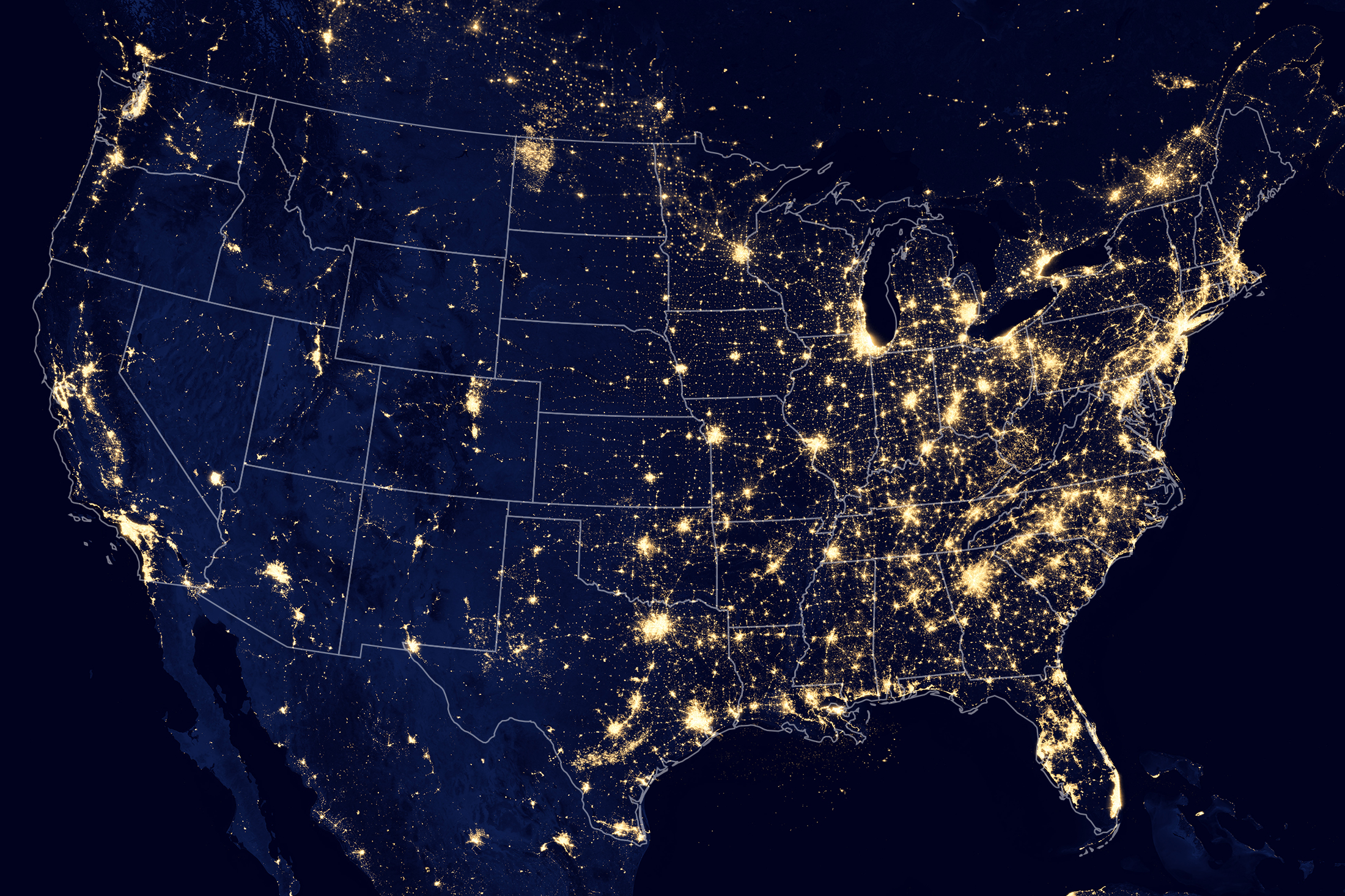 Light pollution map of the United States. Montana shows very little light pollution.
Light pollution—artificial light from homes, businesses, streets and cities—brightens the night sky and reduces the number of stars we can see.
Missouri River Country has something many places don’t: very few large population centers and miles upon miles of open landscape. With less artificial light competing with the night sky, more stars become visible and the Milky Way can emerge in remarkable detail.
And sometimes there’s another reason to look north. When conditions align, the northern lights can add their own show to the Montana sky.
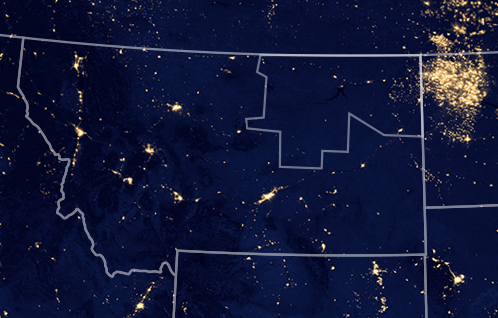 Light pollution map of Montana. Missouri River Country is outlined in the Northeast corner.
You don’t need a telescope. You don’t need to know the names of the constellations. And you don’t need much of an itinerary.
Find a dark place. Give your eyes a few minutes to adjust. Then look up.
Start planning with Trail to the Stars and discover more places to experience the night sky in Missouri River Country.
Wherever you go, recreate responsibly, respect the landscape and leave the stars as the brightest thing behind.
There’s more room to roam and more ways to recreate when you’re in Missouri River Country. Just remember to recreate responsibly, respect our region and stay safe.